

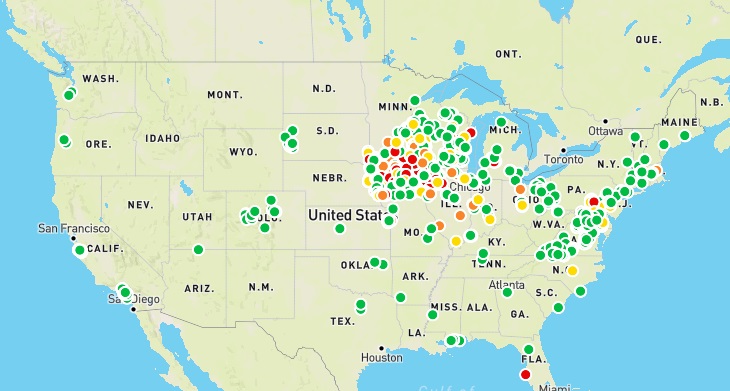
Seventeen of the 41 state beaches listed on the Iowa Department of Natural Resource (IDNR) Beach Monitoring website were rated unsafe or untested for swimming this week.
Beaches are displayed in both map and list form, and you can find the date each beach was last tested and whether there are current swim advisories in effect. Be aware that some of these beaches report only E. coli levels and not microcystin levels.
You can also call the hotline at 515-725-3434. The website has tabs for state beaches, city and county beaches, and beaches monitored by the U.S. Army Corps of Engineers (Coralville Reservoir, Saylorville and Red Rock.) The website and hotline are updated on Fridays during the monitoring season.
Please note: Not all beaches and public swimming areas are included in this data. If your waterway is not included in the IDNR’s database, you are advised to contact the local authority that manages that recreation area for current water quality and safety conditions. As always, report water that looks or smells unhealthy to your city, county or to the IDNR. Pollutant levels, including E. coli and microcystin, can change quickly, even within one day. When in doubt, stay out.
Nitrate levels are surging in several Iowa waterways. On Wednesday, May 27, the Central Iowa Water Works asked residents and businesses to voluntarily reduce outdoor water use by 50% in order to reduce stress on the nitrate-removal system and ensure safe drinking water for its 600,000 customers. Public water utilities are required to keep nitrate levels below the U.S. Environmental Protection Agency (EPA) standard of 10 milligrams per liter for treated drinking water.
To check nitrate levels in major Iowa rivers, check the Iowa Water Quality Information System nitrate map.
Last summer, the Central Iowa Water Works imposed a first-ever lawn-watering ban to ensure that treatment facilities could produce enough water for lifeline essentials due to extremely high nitrate concentrations in source waters.
Multiple studies, including those outlined in the Iowa Environmental Council (IEC) report, “Environmental Risk Factors and Iowa’s Cancer Crisis,” indicate that exposure to nitrate levels far below the federal standard are toxic and can lead to cancer, birth defects and other health harms. This ongoing threat led IEC and partners to call on the EPA to take emergency action on nitrate pollution in Iowa rivers and sue the EPA this month for refusing to list rivers used for drinking water as impaired by nitrate.
“Iowans have been raising alarm bells about our water quality for a long time, and for good reason,” said IEC’s Water Program Director Colleen Fowle. “Major Iowa rivers are among the most nitrate-contaminated waterways in the nation. We cannot wait any longer to address this urgent public health crisis.”